
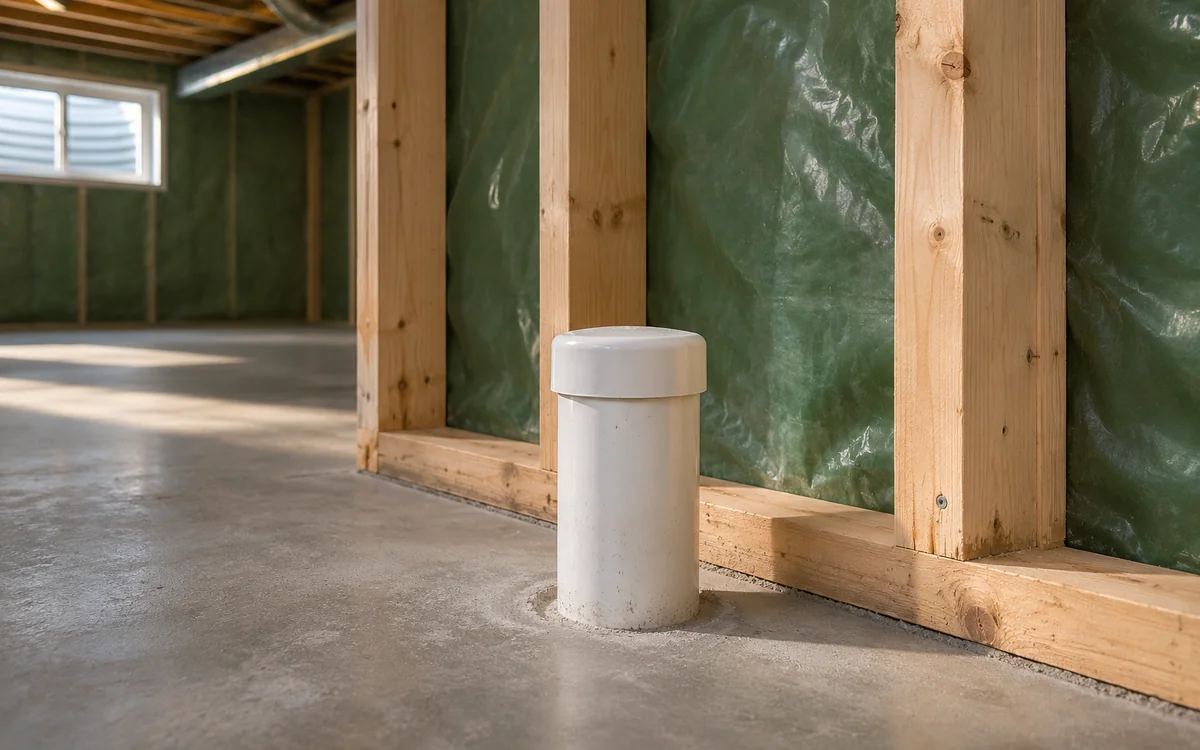
What a rough-in tells you
A rough-in is a provision for a future radon reduction system. Show the contractor the pipe and any builder documents you have. Ask whether the connection reaches the area under the slab that needs to be served, how it will be assessed and what the installed exhaust route would be. A plausible-looking cap does not establish that an existing system is running or that indoor radon is low.
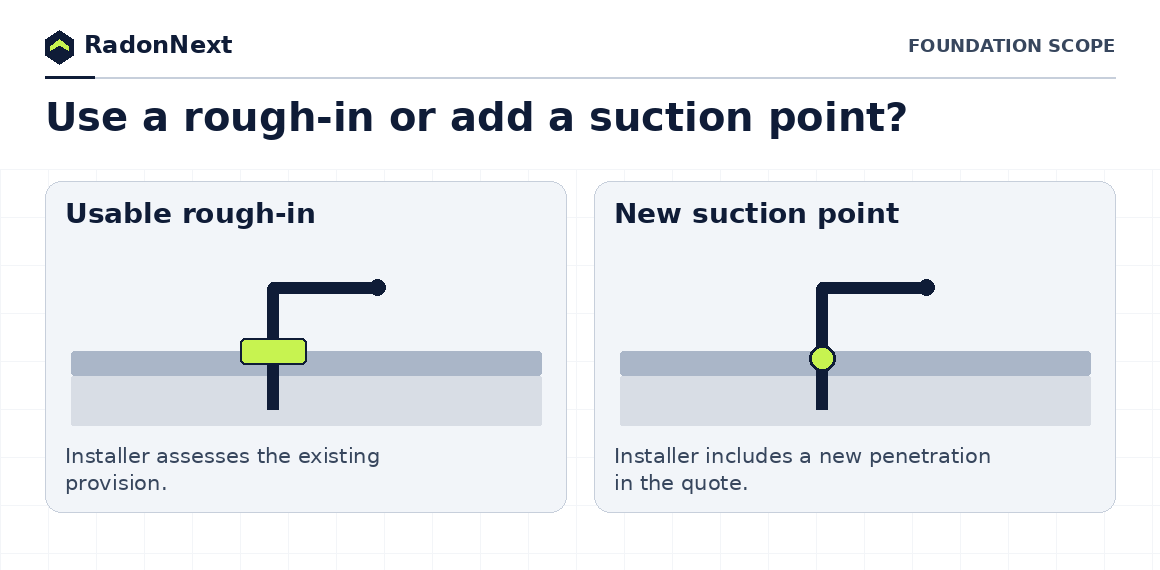
Compare a usable rough-in with a new suction point
ATMOS publishes a Calgary starting price of $2,350 plus GST with a usable rough-in and about $2,500 plus GST when the job needs a new suction point. The $150 difference is one company’s example for those scenarios. It is not a universal rough-in discount. Have the installer explain costs that could change, such as extra suction points, route length and electrical work.
Get the assumption into the written proposal
Ask the provider to state whether their quote assumes the rough-in can be used. If it cannot, get the alternate scope, approval process and additional cost in writing. Ask which verification test is included and who sends the results. If you have two estimates, compare them using the same assumptions about the rough-in and what happens after installation.
Two questions for a newer home
First, ask whether the rough-in serves the original slab, an addition or both. Second, ask what the installer will include in the base quote if the available route is longer than expected. Keep the builder’s plan or any photo from construction to help the provider locate the provision. Arrange verification even if the installer can reuse it.