
Before you return the monitor
Photograph the display and write down the room, the dates and whether the number is a daily, weekly or full-loan average. Halifax Public Libraries lists its radon detector as a screening tool. A high daily peak and an average across the loan answer different questions. Neither measures your year-round exposure.
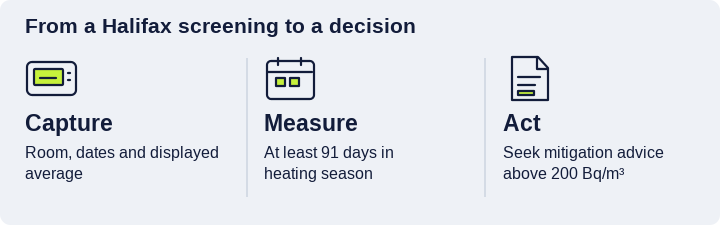
- Capture Room, dates and displayed average
- Measure At least 91 days in heating season
- Act Seek mitigation advice above 200 Bq/m³
How to follow up at home
Nova Scotia lists long-term kits from LungNSPEI and an option to hire a certified professional. Choose a detector you can leave in one normally occupied room on the lowest lived-in level. Aim to include at least 91 days while the home is heated. Keep a copy of the dates and report so an installer can see exactly what was measured.
When to contact an installer
If your representative long-term average exceeds 200 Bq/m³, Health Canada recommends reducing it within one year, sooner at higher levels. Share the long-term report when you ask for mitigation advice. If all you have is a short screening result and you need help getting started, choose a measurement professional in the C-NRPP directory.