
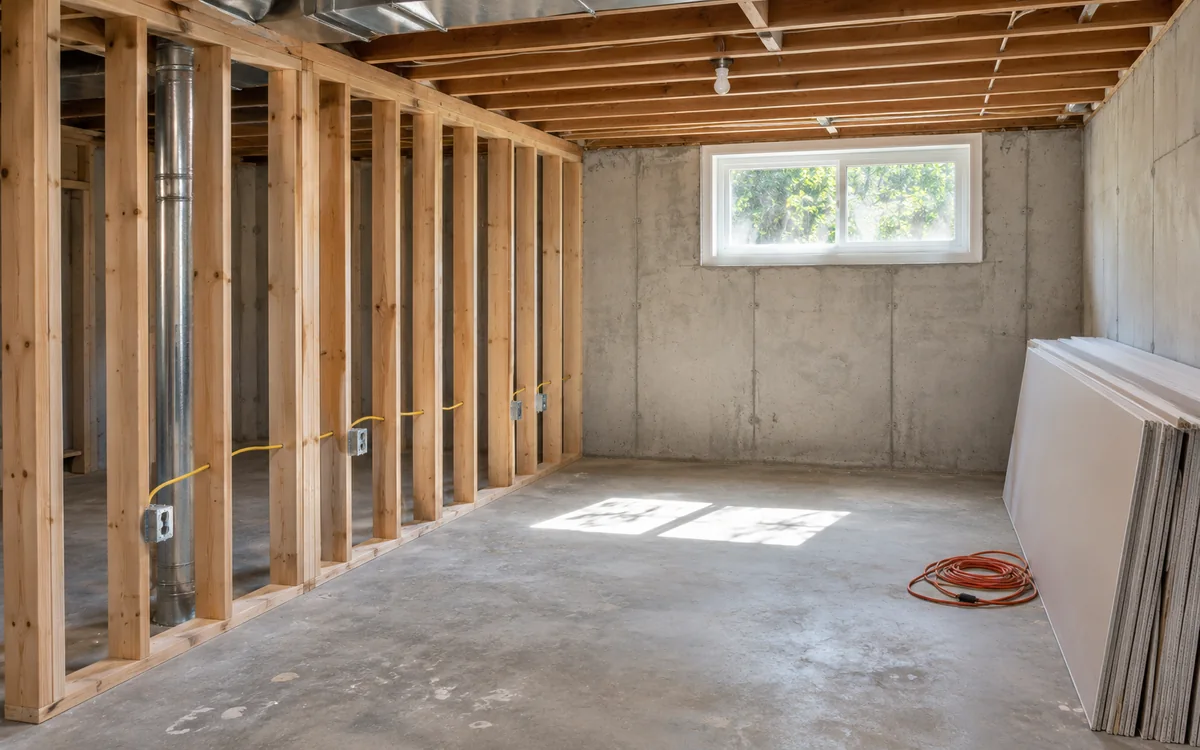
Choose the room you will live in
Health Canada includes rooms that will soon be regularly occupied when choosing a test location. If the timing allows, get a long-term baseline in the future bedroom or office before work begins. In a Montréal duplex, use the unit you are assessing. Québec notes that levels can differ between apartments in the same building.
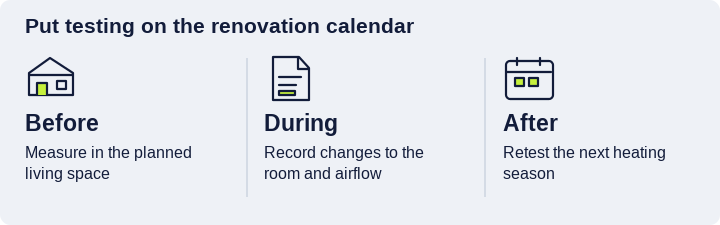
- Before Measure in the planned living space
- During Record changes to the room and airflow
- After Retest the next heating season
Schedule the detector around the work
Allow time for a full test under ordinary living conditions. A renovation that changes windows, insulation or ventilation can change radon levels. Document the room and the dates for the baseline, then note the changes made. If construction is already underway, arrange a long-term test once the space is in normal use. A brief reading taken among open doors and construction equipment gives a poor basis for comparison.
Find a device and plan the follow-up
The Fondation québécoise du cancer lists detector reservations at its Montréal centre. Check the lending period and availability before counting on it for a long-term measurement. After work affecting the structure, ventilation or use of the basement, Health Canada recommends testing again the next heating season. Save both reports with the renovation records.