
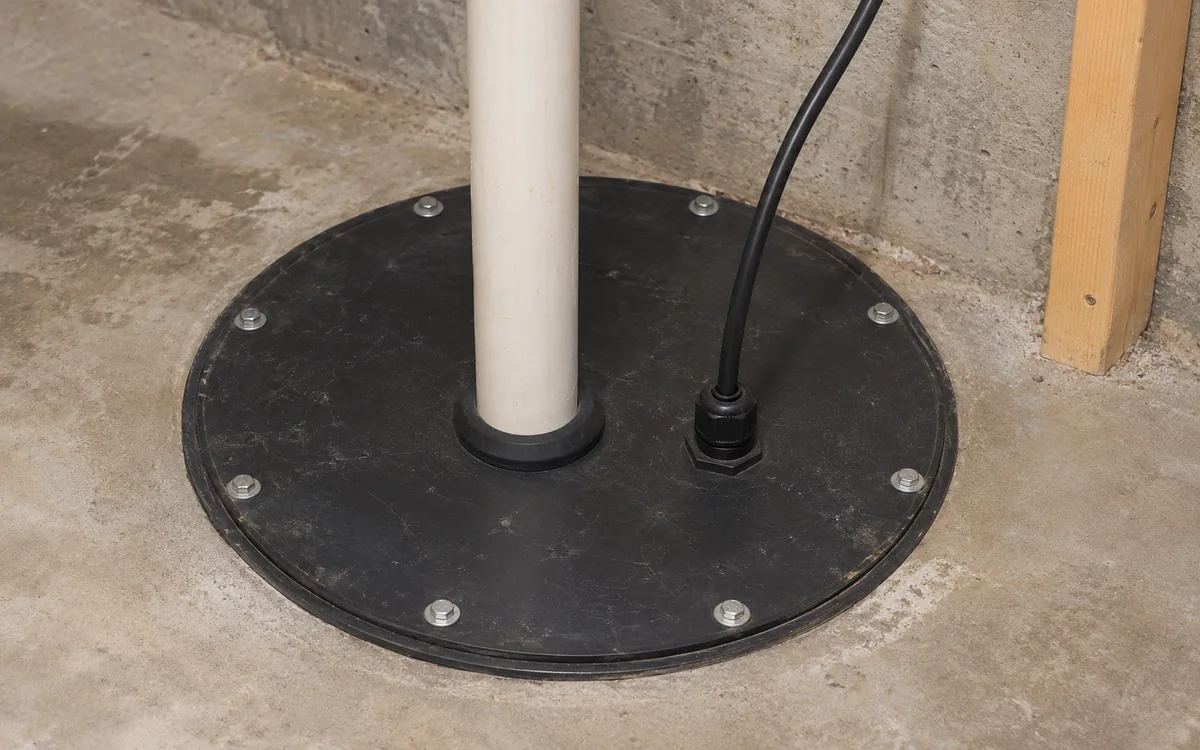
What can still let radon in?
The Government of Saskatchewan identifies sumps, floor drains, slab cracks and gaps around pipes as possible entry routes. An uncovered sump is visible. Smaller openings may be under flooring or behind a finished wall. A photograph can help a contractor understand the layout, but it cannot show the radon level in your living space.
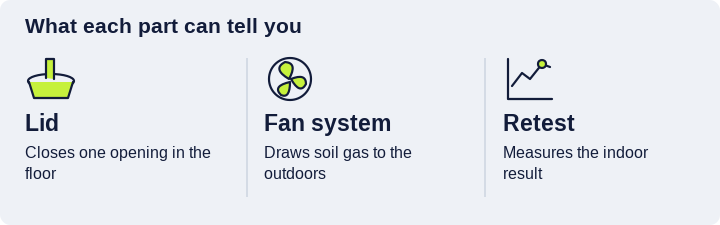
- Lid Closes one opening in the floor
- Fan system Draws soil gas to the outdoors
- Retest Measures the indoor result
Ask what the proposed work changes
Ask the person quoting the job to distinguish a sump cover from an active soil depressurization system. A cover closes an opening. An active system uses a fan and piping to draw gas from beneath the home and discharge it outdoors. Health Canada describes sealing as a supporting measure with limited effectiveness on its own. Have the installer explain why the proposed approach fits your test result and foundation.
What proves the work succeeded?
Agree in writing on who will verify the result and what happens if it remains above the agreed target. When a mitigation system is installed, Health Canada calls for a professional short-term verification after startup and a long-term check in the original test location during the first heating season. From the homeowner’s perspective, the useful deliverable is a report you can compare with the original measurement.